OMEGA cross-architecture operating-system kernel

A Kernel Built Across Architectures

OMEGA is a lightweight, high-performance Unix-like operating-system kernel actively developed by COS Q Network.

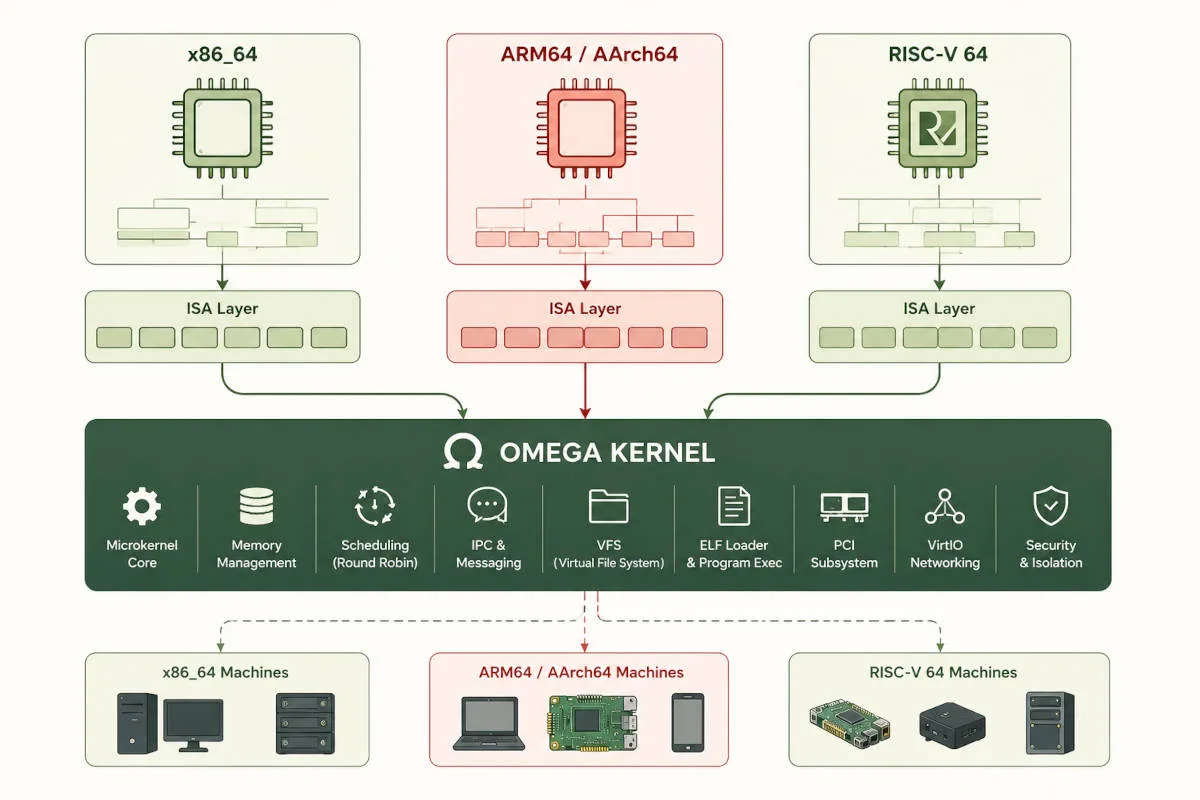
It cross-compiles natively for x86_64, AArch64, and RISC-V 64, with an explicit ABI boundary, native userspace entry paths, and a QEMU-based verification workflow.

Explore OMEGA on GitHub

One Kernel, Three Reference Architectures

OMEGA operating-system kernel architecture and subsystem layers

OMEGA provides architecture-specific boot and privilege transitions while maintaining a shared kernel and userspace model. x86_64 boots through long mode, AArch64 transitions from EL2 to EL1, and RISC-V 64 starts in supervisor mode through OpenSBI.

The kernel includes physical and virtual memory managers, a dynamic heap, interrupt and trap handling, preemptive scheduling foundations, Linux-compatible syscall entry paths, and a native userspace bootstrap.

Its build system uses Clang, LLVM, ld.lld, and CMake toolchain integration without requiring external GCC cross-compiler dependencies.

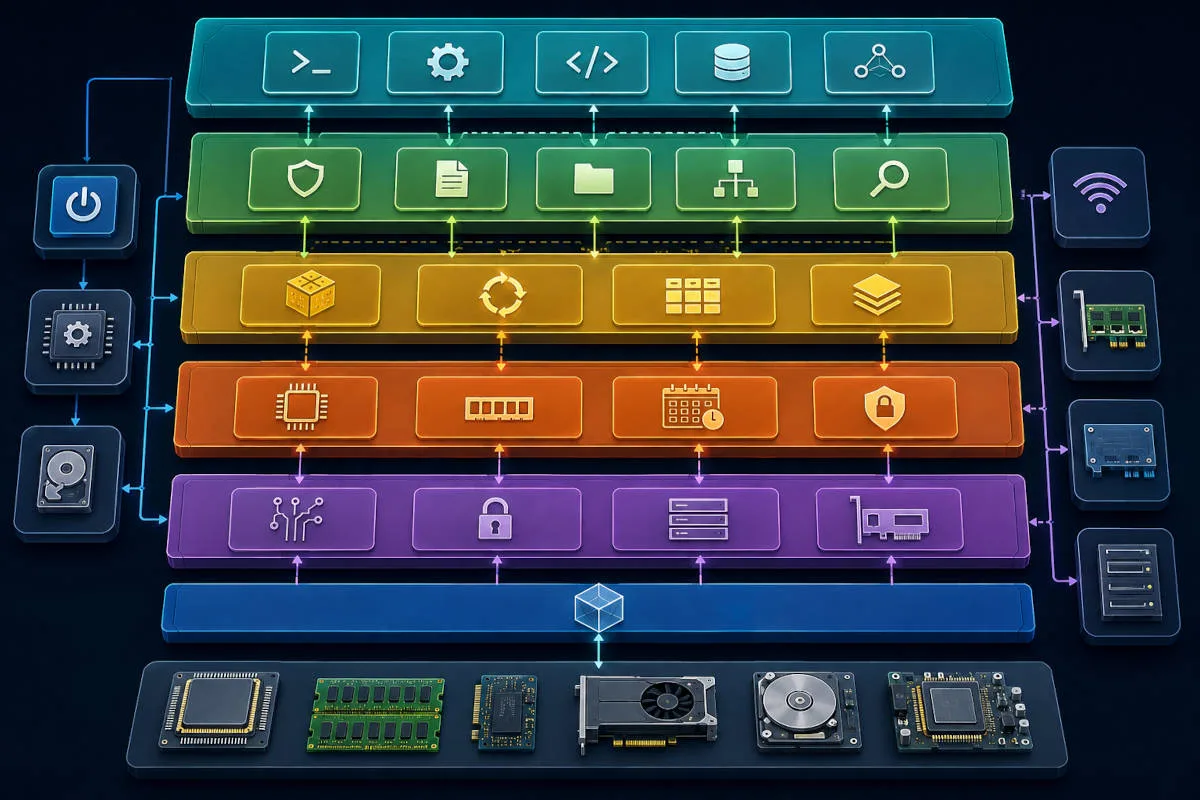
Kernel, Userspace, and Hardware Foundations

OMEGA kernel platform support for x86_64, AArch64, and RISC-V 64

OMEGA includes a bitmap physical memory manager, architecture-aware page tables, a dynamic kernel heap, virtual filesystems, initrd RAM disks, ELF64 executable loading, and per-process address spaces.

Native userspace paths support x86_64 Ring 3, AArch64 EL0, and RISC-V U-mode entry. The kernel provides Linux-compatible syscall conventions, process lifecycle primitives, copy-on-write validation, credentials, groups, ownership, mode checks, and umask foundations.

Hardware foundations include PCI scanning, VirtIO networking, keyboard and HID input, display backends, cross-architecture storage abstractions, and experimental VirtIO-Block support.

Built for Repeatable Development and Verification

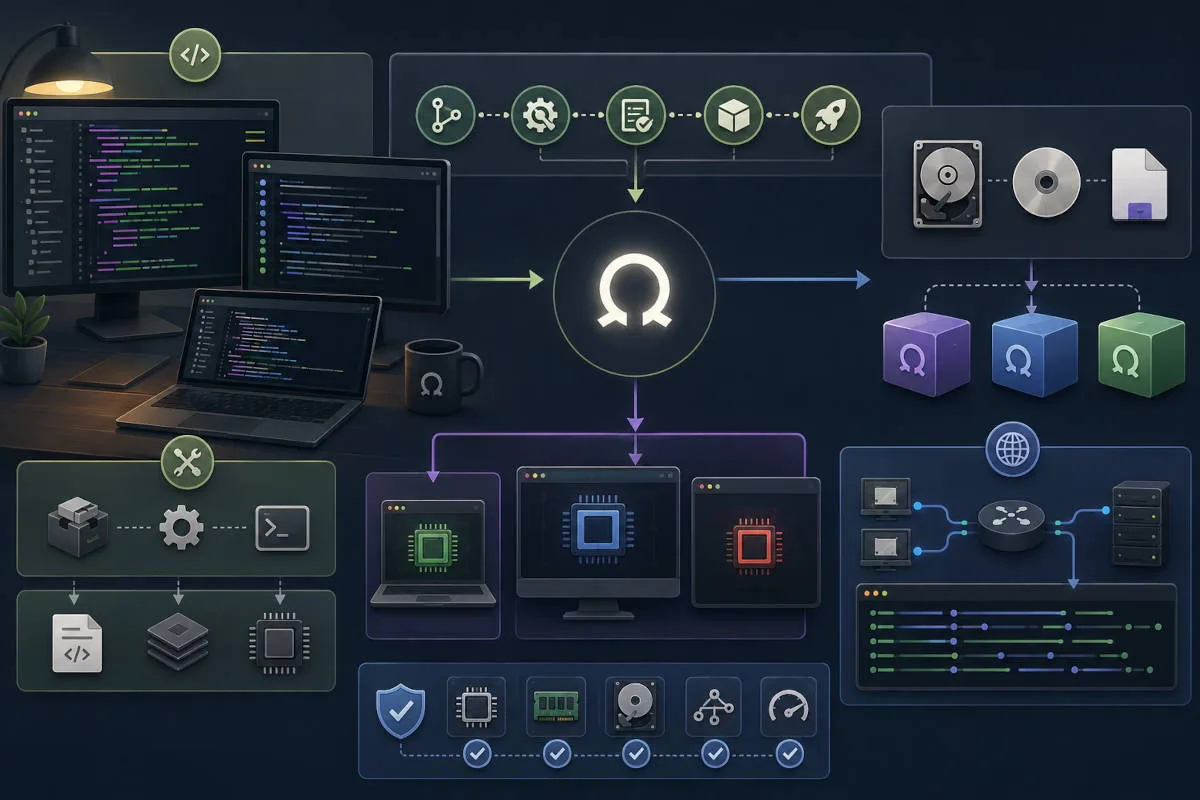
OMEGA QEMU verification, virtual device manager, and CI/CD tooling

The repository includes QEMU launchers, bootable disk image generation, Docker and DevContainer support, GitHub Actions CI/CD, and automated multi-architecture test workflows.

The Omega Virtual Device manager provides an Android-like interface for creating and running x86_64, AArch64, and RISC-V profiles with storage, networking, initrd, snapshots, QMP state, and an integrated VNC viewer.

OMEGA is released under the Apache License 2.0. Use, reproduction, modification, distribution, and patent rights are subject to the license terms, including preservation of required notices and redistribution of the license.

Read the full license on GitHub.

Explore the OMEGA Kernel

Follow OMEGA’s architecture, build instructions, test workflows, documentation, and ongoing development in the public repository.

Visit OMEGA on GitHub